Monday, August 24, 2015

AESTHETIC ALCHEMY IN THE ART OF ERIK D’AZEVEDO


Erik d'Azevedo

Hermetically sealed in his various studios in Oakland , Emeryville and  Berkeley, abstract artist Erik d’Azevedo has labored for over thirty five years to produce “alchemical gold” from the often lumpy, dark and disturbing prima materia of the urban and industrial environment.

As a young  boy Erik d’Azevdo participated in swimming and drawing “water spirits” with his black African friends in a world that has disappeared since then into continual war and holocaust. Erik doubts that any of the boys he knew as friends are still alive.  Thrust back into the urban culture of the U.S. , he felt like an outsider and confesses to feeling rebellious and angry.  Then he discovered art again and that became his destiny, his struggle, his reason for being, his spiritual salvation. And so it was with the ancient alchemists, who sought not just to turn base metal into immortal gold, but to explore a corollary change within themselves, a purification on the spiritual level which they represented as the quest for the philosopher’s stone.  Carl Jung felt that ancient alchemy had been an opportunity for consciousness to explore itself through material means, a symbolic representation of what he called in his psychology, the process of individuation which we must all experience.

He favors large canvasses worked on the floor (something that he can trace back, not to the images of Pollock at work on drip paintings, but to the wildchild art he did on the floor of his parent’s house at the age of six with his school mates in Liberia where his anthropologist father was studying the Gola peoples.) And like an alchemist staring into the chaos of bubbling retorts, he developed techniques in which he would be guided by his process and what was taking shape before him that in the best instances would produce wonderful surprises and a finished work of art that would “sing” as he says, with “...the most beautiful sound you’ve ever heard.”

Berkeley 1976


In the studio D’Azevedo slathers a large sheet of plastic with layers of paint, in some phases of exploration using roofing paint, oil-based metal paint used for waterproofing rooftops, or acrylics made from metallic powders mixed in a blender with a clear liquid  base.  Then the wet sheet is rolled out over the canvas and pressed with hands and feet, transferring the color to the canvas in the manner of making a Rorschach ink blot. 

“What makes it interesting for me,” he says, “is the surprise element, the fact that I never know quite how it’s going to turn out.”

Working on several large canvasses at once spread out on the studio floor, he may venture deep into chaos. Recalling a certain moment of discovery, he says, “...the floor was covered with paint, sticks, matchbooks, [just] stuff that was on the floor.  It would sort of get glued together in this mass and "I started liking what was on the floor more than what was on the canvas...”

“Chaos is a reaction to rigidity and structure,”he reflects. But he insists there is such a thing as “Purposeful chaos". "There’s a kind of order to the chaos that I make.... The idea of intentionality makes the difference. In other words, the idea of a controlled accident, that’s a deliberate attempt to make a mistake, to see what happens.  If it works, you stick with it.”

D’Azevedo references a book, Man’s Rage for Chaos, by art historian and aesthetic philosopher, Morse Peckham, that has influenced his thinking.  Peckham avers that—contrary to common belief-- art does not unify and order experience. He believes that we are seduced into the fallacy that art satisfies our need for
order by the neat packaging in which art objects are presented in concert halls, museums, metrics and buildings. Too often in the name of order we eliminate the very quality in a work of art which might lead our consciousness into new fields of perception.

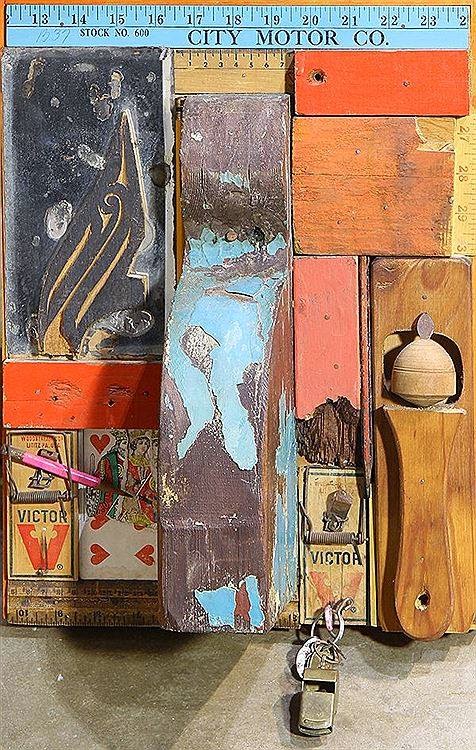
In a special series from the mid seventies that d’Azevedo calls “The Industrial Paintings,” he began to hunt hardware or hobby stores and scour trash piles looking for things that would catch his eye. Things like PVC plumbing pipes and fittings, wooden dowels and odd shapes of Styrofoam and foam core that he could glue directly onto the canvas and then paint over. In an uncharacteristically austere group of paintings that might be characterized as minimalist steampunk, he romances the look of large riveted steel structures like the vintage bridges that connect the conurbation of the Bay Area.

“Steampunk” was a word put into cultural circulation by the noir sci-fi writer, William Gibson, in his novel (with collaborator Bruce Sterling) The Difference Engine. And indeed it would be easy to imagine many of d’Azevedo’s paintings as components in set designs for movies based on novels by this author, who gave us as well, the words cyberpunk and cyberspace and defined a genre  that mingled lowlife with high tech.

But there is also beauty in d’Azevedo’s paintings, of the sort that one might associate with the art brut, or raw art of Jean Dubuffet who in the early days of modernist movements approached with the radical understanding that beauty must be fertilized with ugliness to keep art alive. Like d’Azevedo, Dubuffet was drawn to unorthodox materials such as cement, plaster, tar and asphalt scraped, carved and drawn upon with a rudimentary, spontaneous line. Dubuffet was also drawn to the art of the insane and the untrained artist, what we now call outsider art.  And it is interesting that even though Erik d’Azevedo holds a BFA and an MFA from CCAC and has received several grants and awards, he recalls being worried
at the outset of his formal training in art that formal training would ruin him.

d'Azevedo 2003 Acrylic 96x75 inches Farhat Art Museum collection

Since the advent of modern abstract art in the 1940s and 50s—and continuing into the present—our eyes have been opened, not only to new ideas of what a painting can be, but also to new kinds of beauty to be seen everywhere. The flattened milk carton beside a skid mark on the pavement forms a perfect composition or a gorgeous plume of bright orange running down from a rusted
nail driven into the siding of a weathered house may suddenly be seen as “a painting,” a formal arrangement of shape and color with great beauty.  And things in the world around us seem to take on a mysterious life of their own.

The sterile monotony of the rectilinear designs of the city environment—seen in the grid of streets, boxy buildings, the sky framed by windows—is continually assaulted by the ever-present forces of Nature, including that original, pre-civilized nature that is still operative within our own psyche.  Rain washes, cracks appear,
a trail of ants streams up the cabinet to the jar of honey inside, raccoons go through the garbage cans, the homeless encamp with their refuse under the elevated freeways while tidier forms of corruption go down in city hall, and the radio gives the daily traffic report of crashes across the lanes.

I have styled Erik d’Azevedo as an art-alchemist not because he professes to be an alchemist or even an interest in historic alchemy, but because it seems to be the perfect metaphor for understanding his art. The medieval alchemists had observed the paradox that Nature produced good  and edible things from the rot of compost and they sought to emulate this transformative power of natural process in their laboratories.  Expressing himself in several self-published books of poetry as well as painting, d’Azevedo offers this description of “urban compost”—

   I hear the garbage trucks as they go
   predawn squealing machinery gathering
   filthy loads wet with raw
   and undigested food, baby diapers.
   I hear siren’s anxiety signals
   a punctuation of pointless life.
   Computers keep score of an environment
   that lives on black refuse, fed black gas
   of burning rubber, fat and gristle.

As Taun Relihan notes in her short essay on alchemy in the catalogue to the SUPERTITION show at the San Francisco Center for the Book: “Alchemical work was difficult, tedious, expensive, lonely and often deadly.  Alchemists were noted to be a depressed lot, prone to melancholy, as in Albrecht Durer’s engraving, Melancholia I... Whatever else, the images and literature of Alchemy are fascinating, luring us to further exploration of the wonders of ourselves, the works of nature, and the transformative depths of art.”

The same can be said, I believe, of the art and poetry of Erik d’Azevedo.


from APPLIANCE POEMS, Erik d’Azevedo (1988, Albino Press)

   Dismantle anyone who can’t give self
   completely to it...

   Hands of 1000 moments forgotten either
   too good
   For or not good enough to make stones
   cry out and be more than vulgar
   colorless variations of a known thing...

   Something to remember at the end of a
   day
   At the end of a youth
   when the mind ponders what it created of
   A body of best years...


Essay: AESTHETIC ALCHEMY IN THE ART OF ERIK d’AZEVEDO 
by Will Cloughley, August 2015 

Monday, June 8, 2015

"La Danse du Printemps Arabe" Exposition de Nour Ballouk, Article par Hussein Hussein

Rituals (Gaza) , Nour Ballouk 2015
L’œuvre de Nour Ballouk se présente à nous, encore une fois, dévoilant la grâce de la femme, mais dans un contexte qui, loin d’être ordinaire, est composé de plusieurs notions, d’habitude difficilement miscibles. L’artiste crée un nouveau langage, qu’elle puise de plusieurs autres, de temps différents, et le rend accessible au spectateur qui, après une brève méditation en face de l’œuvre, parvient à en déceler le message.
Nour Ballouk aborde, de façon frôlant le sarcasme, le thème du « printemps arabe » qui s’est avéré être indépendant des principes par lesquels il fut annoncé. Ce qui devait être l’aube des peuples de la région, se muta en guerre dévastatrice, auparavant inimaginable. L’artiste nous incite, par une manipulation picturale intelligente et minutieuse, à concentrer notre attention sur le contraste de la beauté, la grâce, la féminité et la vie par rapport à la laideur de la guerre, la cruauté de la destruction, la perte et la mort… 


The Map, Nour Ballouk 2014

Á première vue, la surface picturale traitée soumet notre logique visuelle, poussant notre raison vers une sélective lecture de la scène où se juxtaposent des éléments qui ne peuvent être mis dans le même contexte. C’est exactement ainsi que l’artiste veut nous présenter son œuvre. Le coté visuel est précis et clair ; des ruines de villages et de villes détruites qui composent la totalité du fond dans quelques œuvres, pour n’en couvrir qu’une partie dans d’autres. De ce chaos émergent des figures dansantes que l’artiste emprunte de photos populaires de danse et dont la plupart est tirée de différents ballets, mais, celles-ci détiennent cependant un principal point commun : la représentation de la femme par d’anciennes photos en noir et blanc. 
Loin du hasard, ces figures montées sur le fond répondent à une composition profondément étudiée par l’artiste. Les éléments visuels qui s’y ajoutent découpant la surface de part et d’autre par des bandes pleines et colorées, ou se formant en groupe de lignes de différentes épaisseurs, sont en majorité horizontales et adhérent parfaitement à l’ensemble. Cette ligne limite donne à l’œuvre un équilibre amorçant la chaotique répartition de quelques éléments du fond, tout en la couvrant d’un lourd silence. D’autres éléments utilisés, à l’instar d’une carte entre les bras d’une des figures qui semble s’en vêtir, dénote un territoire précis en relation avec celui où se déroule le soi-disant « printemps arabe ». Parfois, une danse en groupe semble être un rituel autour d’un feu attisé par les ruines et consumant ce que jusque là l’homme avait bâti.


Nour Ballouk 2015

Après cette visualisation d’apparence simple, se dégage inévitablement un sens métaphysique et spirituel profond qui capte le regard du spectateur. Une femme qui tend les bras, semble par magie présenter un dôme surplombant les ruines où des enfants sautillent, ou s’acharnent à la recherche de leur demeure. Images de destruction totale d’où s’élève une figure frivole sur une bande jaune. Des gens qui discutent désespérés, leurs pertes communes, des restes éparpillés d’objets dénudés de leur valeur initiale, qui acquièrent un concept nouveau, grâce à l’œil analytique de l’artiste qui insère une figure féminine jaillissant de nulle part et qui, de sa beauté et de sa grâce atténue la pesanteur douloureuse de la scène en promettant le calme éternel. L’image de la femme dansante semble figée dans son temps, le reste des éléments, dans le leur. Gracieuse et légère, la figure dans l’œuvre de Nour Ballouk, danse sur une musique dont on sent la présence, mais qui, à la place d’être auditive, ne s’écoute qu’à travers l’âme. Il est difficile d’éviter un raisonnement d’au delà, cette danse semble bel et bien effectuée par des fantômes. Peut être celui des martyrs, de la femme mère, à l’origine de l’homme, l’homme victime, et l’homme bourreau. 
Le choix de la danse dans le contexte où Nour Ballouk la place n’est pas hasardeux. La danse est le premier-né des arts. Chez l’artiste, elle tend vers le rituel, dénote le repentir et devient prière. Á travers celle-ci, le corps passe à l'état d'objet et sert d’outil à exprimer les émotions par les mouvements, l'art devient le corps. Pour certains la danse est liée à la beauté féminine, pour d’autres la danse conjure le sort, danse de la pluie ou danse de prière, ou sert à plaire aux dieux comme dans l’antiquité romaine. Etant un symbole expressif avant tout, Nour Ballouk y ajoute une dimension métaphysique qui lui est propre et qui sans aucun doute ne laissera pas indifférents ceux qui verront son œuvre.

Hussein HUSSEIN

Sunday, May 3, 2015

أعمال الفنان خوسيه رامون ليرما المزج الفني بصورة معاصرة ـضحى عبد الرؤوف المل

من أعمال الفنان رامون ليرما , مجموعة متحف فرحات

يتجرأ الفنان «خوسيه رامون ليرما» (José Ramón Lerma) على المزج الفني بصورة معاصرة يجمع فيها بين القديم والجديد ضمن رؤية أيقونية في ايحاءاتها المبنية على منح الحس البصري تعبيرات تجربدية ذات رؤية توحي بفن متنوّع في تطلعاته الابداعية، المتعلقة بخلق مؤثرات بصرية تتسم بالوعي الفني الموحي بأيقونية الرؤية المعاصرة، وتكنيك مفرداتها الجمالية المغايرة لمفهوم الكلاسيكية المتمرّد عليها «خوسيه رامون ليرما» والمتوافق معها. إنما يقدمها بأسلوب فن ذي خصائص تراثية أو معرفية أو حتى رياضية وهندسية، ليحاكي بشعبيتها البصرية الحس الإنساني بدفء بساطة خاضعة لمفاهيم هندسية يخفيها ضمن الأبعاد الثلاثية،  كخدعة بصرية تتناسب بمفرداتها البصرية مع سيكولوجية الشكل المحاط بالألوان الخاصة، ومعانيها الخاضعه لتفاعلاته النفسية المؤثرة على ألوانه المميّزة من حيث التعتيق التجريدي، المؤدي الى بث اللوحة جمالية تحيط بها الخطوط على اسطح يمنحها ثلاثية أبعاد تميل الى خداع البصر أحيانا، ليوحي بأيقونية الشكل التجريدي تعبيرا عن مفاهيم وجدانية يبوح بها من خلال لوحة تشكيلية معاصرة.
من أعمال الفنان رامون ليرما , مجموعة متحف فرحات

تجريد تعبيري متماسك وهندسة فنية تتحوّل عناصرها الى لغة ذات تحوّلات ينجزها «خوسيه رامون ليرما» كابجدية تراثية مقروءة بصريا يمنحها لذة الاستقراء، فايقاع الخطوط والأشكال المتقاربة والمتباعدة تثير الأنماط المركبة أو الترتيبية في رؤاها التصميمية، المنفذة بتوازن ذي مقدرة تكشف عن حقائق حياتية مجردة بتكويناتها ذات البعد التطوري، المتخذ من فن التصوير الرؤية الانعكاسية المحبوكة مع المعاني التجريدية والتعبيرية، والمفاهيم الأخرى التي يمزجها مع مسارات توحي بالايقونية المركبة عبر خلق انطباعات تثير الخيال، وتنطلق بصريا مع الحس الهندسي نحو مقاييس اللوحة وقوتها المرتبطة بالمفاهيم الرياضية وخصائصها المميّزة من حيث الكبير والصغير، والبعيد والقريب، والضيثق والمتسع موضحا للتراث الانساني القابل لمفهوم التحولات التشكيلية الخاضعة لجدلية الفن المعاصر.

من أعمال الفنان رامون ليرما , مجموعة متحف فرحات

تمثيل تشكيلي يؤكد على التناقض الحركي والتناغم الساكن في الألوان المركبة، وبإحاطة تشتمل على قواعد خاصة بأسلوب الفنان «خوسيه رامون ليرما» إذ يستثير الحس من خلال مستقبلات اللون التي تتفاعل مع العاطفة، تاركا لعقلانية اللوحة اثبات قيمة الخطوط والابعاد، والمنظور المعكوس على تحديد الأشكال، ونقاط بدايتها ونهايتها، وسماتها الفنية المرتبطة بالحس الجمالي وعلامات التعجب التي يثيرها هذا الفن السهل الممتنع، الملامس بمرونته لفن يدوي تمثل بلوحة تشكيلية تعيد له رمزيته الخاصة. إذ تبدو الأسهم، والصحن، وأوراق اللعب، ووحدات القياس من العناصر المهمة في تشكيل اللوحة، عبر صورة ذهنية تحيا تراثيا من خلال عناصرها الجوهرية التي تحاكي الأزمنة والأمكنة برؤية ابداعية، وبتجانس متزن مع الأبعاد وفروقاتها  النابعة من الابتكار المعاصر في التصميم التشكيلي، وقدرته على تحريك ذهنية الصورة الراسخة المكوّنة من الأشياء حولنا، وبساطتها الداخلية والخارجية عبر حدس لا شعوري يعيدنا بوعي الى الطفولة وفطرية الإنسان في رؤية الجمال.
أعمال الفنان «خوسيه رامون ليرما» (José Ramón Lerma) من مجموعة متحف فرحات.

Friday, February 27, 2015

Vanessa Stafford’s Journey, By Brian Mc Cracker

Cleaning Ballet, Farhat Art Museum collection

"A lively expression of color…”, says Emily thoughtfully.
“Whoa! Totally sick!” brays Rosie the Barrista.
They are both complementing the paintings of Vanessa Stafford, an artist who specializes in the subtlety of night scenes, of light and water, and city scenes… a visualist painter, a narrative artist, whose current canvasses have the tones and flavors of Klee, Gaugin, Chagall, and James Doolin. Her earlier work is surrealistic whimsy that floats closer to Peter Max or Aubrey Beardsley than Heironymous Bosch. Current paintings are more structured and harmonic, but still tinged with a dream-state and a curiously muted intensity. A musical rhythm is evident in her orchestration of movement that unifies disparate elements. That is an extension of her training as a cellist, as well as the influence of her parents, both jazz musicians.There is also a sense of boldness of imagination and a willingness to pursue it. 
For nearly thirty years Ms. Stafford has been a significant artist in the seaside community of Santa Cruz, California. She began at the age of fourteen decorating eggs in traditional Baltic style and colors, selling them for eight dollars each. Today, her canvasses hang on the walls of collectors and, tellingly, on the walls of other artists. She has exhibited at San Francisco’s Palace of the Legion of Honor as well as at galleries across the United States and internationally.

Birthday, Farhat Art Museum collection

“I respect her work quite a bit” declares Russel Brutsche, a Santa Cruz artist who exhibits extensively in the West. As a mutual member of Artwork Network, an informal artist support group, Mr. Brutsche has watched Ms. Stafford’s style and technique progress for ten years. He notes her interest in capturing movement and the quality of light in night scenes as an indicator of her personality and style. ”She uses a lot of glazing in her acrylic…in fact, to the max…to get a sense of depth. But it is not just her unique and distinctive style that strikes me. It is the fact that she chooses challenging projects. She really takes chances. Vanessa is not a safe painter.”
Another artist, Kevork Mourad, says, “Vanessa Stafford is highly gifted. She has an insightful use of light. I love her colors… Her colors are vibrant.”
“Doing realistic scenes and going after the essence of nature, including the chaos, is crucial in art because that is where original ideas come from.” says Stafford. “A combination of order and chaos is important. Too much orderliness is sterile. Too much chaos is self-destructive. I grew up in a very chaotic background. I wanted order. But looking back I see the value in the chaos. I am pleased when images manifest themselves on paper or canvas. I do art for my own satisfaction but I do like to show and I do care what other people think of my art. I want the people who buy my works to see them as joyful, magical. They should be warm, graceful, to be loved.”

Chaos and Order, Farhat Art Museum collection

Stafford paints scenes of inner journeys and external realities with command of her mediums, which include watercolor, pen and ink, oil, acrylic, and inlaid glass mosaic. “I especially like the intensity, biting vibrancy, and versatility of acrylic,” she explains. “Oil I use when I want a softer effect. Something I am getting interested in is hiking and discovering the patterns in nature, for example, the abstract quality of streams. You can see the pattern of strips of sunlight going through to the bottom, and then you can see the shadows. I am very intrigued and challenged by the transparent quality of water and of the patterning in different layers as it appears, disappears, and reappears very quickly. I focus on the different levels of light and shadow: at the surface, in the middle of the water, and the bottom, integrating them with their patterning on plants, boulders, muddy ripples, coarse pebbles, sodden leaves, fine sand, moss, and organic debris. It’s tricky stuff but that’s what’s challenging to me. It’s totally thrilling and challenging, because it’s like, IMPOSSIBLE! Most people think it’s impossible, but I think, ‘Yes, I can!’, and I will!” Ms. Stafford’s ability to become absorbed in reflection over the puzzles of patterns during her walks has a hazard: “I sometimes walk into trees!“, she says.
From her home on a bluff overlooking Santa Cruz Harbor, the sound of breaking surf and barking elephant seals rolls faintly through the screen door. The air in her living room is scented with sea salt and linseed oil. One wall is a shrine to her mother. The other walls are covered with her framed paintings. More are stacked in a corner. In another corner is her painter desk speckled and daubed, an elegant black cat sleeping in a banded rectangle of sunlight leaking through the Venetian blinds. A bookcase spills books onto the carpet, especially her favorite author, Katherine Anne Porter. CDs, classical and jazz, are stacked near the boom box pointed at her work area. Debussy is playing as she paints. “I get visual images while listening to music. I don’t like to draw silence or be in silence as I create.”
Ms. Stafford’s journey to her current level of technical expertise was a long and thoughtful one: “When I first started painting I used watercolors, and I would lay down the idea with ink lines. I used a German technical instrument called the Rapidograph. My other school chums had them as well, and we loved using them. We used the tiniest line imaginable, called a four ot line (in terms of line width). I would draw these very fragile outlines and then paint in the colors with watercolor. My beginning watercolors were very pale, as I applied the color hesitantly. I was a teenager (14 years old) and was shy. Those paintings looked shy. About twenty years later I had exhausted the possibilities of watercolor. I wanted to use colors that were stronger, or different, or be able to get a different ‘look’ to my paintings. I started using acrylics. Acrylics are sort of like watercolors, since they are water-based, but they have a polymer binder in the pigments which allows you to paint in an ‘opaque’ way. I started with acrylics by squeezing the color out of the tube, onto a palette, and thinning them down quite a bit. I painted the so called ‘undercoat’, the very basic background colors. Then with the next applications of color I would squeeze the color out of the tube and not thin it down as much, so that the brush strokes began to be opaque. I would use the opaque strokes selectively, like the side of a building for example. That's a good place to lay down opaque brush strokes. I would use a flat brush of different sizes, anywhere from a 4 "000" (small tip) to a 1 "0" (wider tip). I experimented using opaque brush strokes and fusing water into a part of that brush stroke to make it suddenly thin. That would create a variety of opaque levels, as well as create a change in texture. An example might be a boat harbor scene where the surface of the water changes and has opaque parts and translucent parts.
I also wanted to become proficient at oil paintings since they are so traditional. I was determined to ‘conquer’ oils. Oil paint is basically opaque: you can achieve a translucent layer with enough linseed oil, but it looks funky because it produces a very uneven surface texture if you thin it too much. I painted "nature" subject matter, like dead tree branches halfway submerged in a pool of water. I painted outdoor scenes, like that salt pool place in Moss Landing. I did get a lot of practice in. I was out there in the fields with other artists, and it was a blast. Very exciting and adventurous. But my back paid a price for hauling around all these heavy easels, canvases, boxes with oil tubes, and brushes.
It was a lot of physical work but I painted a lot and when you keep painting you develop this automatic response, kind of like driving a car. You're not thinking about every little maneuver when you're driving, it becomes automatic. You know when to down-shift and do it evenly, without thinking about it. That's the way it is with painting when you do enough of it. Part of the painting process becomes automatic, and you can experiment while in that automatic mode. It’s like combining opposite modes(automatic with experimental) to achieve something new.


Still Life, Farhat Art Museum Collection

There's an intuitive aspect to experimenting. You have to try things without analyzing it too much, otherwise there's a premeditated look, a kind of predictable flatness that happens. If you let these weird brush stroke combinations of thick and thin, opaque and translucent happen, it has this fresh spontaneity. I think it takes years to paint in a stream of consciousness kind of way. You have to be very familiar with the media you're using. Usually in the beginning, when a painter is not familiar with the media, the paintings look stilted. It's interesting how brush strokes and applications of color can portray confidence , or lack of it!”
Another aspect of Stafford’s career is her teaching. She has a teaching credential in Art from San Jose State University. “I’ve taught art classes in public schools”, she says. “I like the enthusiasm of elementary school students. They usually like my classes because I have really fun art projects. I design art lessons for the different age groups. There are lessons I have that involve introducing watercolors as a medium, as well as other mediums. For example: pastels, colored pencils. I give short, entertaining lectures (for short attentions spans) and teach the basics. At older ages I'll introduce one point, two point perspective lessons. I'll show the railroad tracks disappearing into the horizon, explaining the vanishing point as the rail road tracks come to a point off in the distance. Nine year olds are old enough to grasp some of these concepts, as long as you use concrete examples. Perspective can get very confusing and tedious but it's important. Otherwise they might be in a state of ignorance for the rest of their lives. The fun part is opening their world. For a lot of them, this is the first time that they have experienced Art. I like teaching. I like opening the door of possibilities for other people."

Friday, February 20, 2015

أعمال عدنان يحيى ... لوحات ترفض الموت بقوة الحياة ,بقلم محمد أبو زريق

عدنان يحيى , صبرا وشاتيلا, مجموعة متحف فرحات

عدنان يحيى من الفنانين القلائل الذين كرسوا ابداعهم للقضية الفلسطينية او تحت ضغطها ووعيها ابتداء من هول التهجير القصري الى المجازر والشهداء وصولا الى معايشات الواقع الراهن من حصار وقمع وارهاب وقد تناول ذلك كله بأسلوب فني يجمع ما بين الاحتراف والتمييز من حيث طرح الخطاب وانفعاليته مستندا على تقنيات وأساليب متعددة كالميل الى الكاريكاتير أو اللجوء الى استعمال الرمز أو الاشارة والحروفية والخط واللون في اجواء سوريالية وتعبيرية مختلفة .
بدأ مشواره الفني بداية الثمانينيات من القرن الماضي معتمدا على التعبيرية الخطية مستفيدا من قراءاته الروائية في رسم الشخصيات خاصة تلك التي تعود لكبار الروائيين العالميين وقد كانت تلك المرحلة كنوع من البحث عن شخصيته المستقلة التي لا ترى في الفن الا ذلك الجانب التعبيري الملتزم بقضايا الانسان خاصة ما يتقاطع منها مع قضيته الأولى فلسطين ولعل الحدث المهم الذي ثور لوحاته هو مجزرة صبرا وشاتيلا التي أخذت منه العديد من السنوات وهو يحاول التعبير عن هولها وقد جاءت هذه الأعمال بالأبيض والأسود تسندها خطوط تعبيرية واستفادات كاريكاتيرية عبرت عن مأساة الحدث ثم بدأت الألوان تدخل لوحاته بشكل خجول في البداية وعبر المراحل المختلفة  التي تطور بها فنه الى ان اصبح اللون العنصر الأهم في لوحاته .

عدنان يحيى, الشرق الأوسط,2003 , مجموعة متحف فرحات

ولأن عدنان لا يقنع بمنجزه خاصة تحت ضغط الأحداث المأساوية التي تحدث  كل يوم في فلسطين فإن مجزرة الحرم الإبراهيمي في الخليل ستحدث نقلة اخرى لديه مستفيدا من شاهد الضريح وأرضية الحرم لتصبح منصة الحدث ورمزا له ، فقد لعب على هذا المشهد في أعمال كأنها تخطيطات ملونة لنصب تذكارية يمجد فيها الشهادة بل ان هذه النصب ستتحول تدريجيا الى كتل بيضاوية تتطور لتأخذ شكل الرأس الإنساني ، والذي اتخذ منه وسيلة للتعبير عن شخصية الديكتاتور كرأس ضخم يرتكز على آلاف المسحوقين من البشر ثم يصوره مفرغا من المحتوى من خلال البيضة المتآكلة الفارغة او من خلال الذات المتضخمة التي تتكدس على صدرها الشارات والنياشين والتي افرغت من محتواها لمفارقتها مع الشخصية التي تحتل بزتها العسكرية .
ان الأشكال الإنسانية التي تتكدس وتتناثر كأنها زواحف او حشرات هو تعبير عن السحق والنعاناة وتحول الانساني الى ما هو أدنى وهي حيوات تتصادم وتذوب في كتلة تبدو متحدة لكنها تحمل سمات تنافرها على المستوى الموضوعي ، وهي تمثل رؤيته كشاهد رأي وعايش الحالة الانسانية من داخلها فما كان منه الا ان يستعين بما قرأه وشاهده وعايشه فتحول الانسان الى صرصار يعيدنا الى كافكا وابرازه للأم كشخصية قوية يعود الى رواية الأم جوركي ، بل انه لا يرتكز على قراءاته الروائية وعلاقة ذلك بحياته الشخصية فقط ولكنه يسندها بحس كاريكاتيري سوداوي كأداء ، وتقنيات التحبير والتلوين كخامات ، وصولا الى تعبيرية تتطابق تماما مع شخصيته ، حين وجد نفسه وجها لوجه مع واقع اليم هو أحد ضحاياه ، فقد عانى النفي والتشرد كغيره من الفلسطينيين ، ولم تكن مذبحة صبرا وشاتيلا ، إلا الشرارة التي حولت خطوطه المغرقة في تفاصيل هائمة غامضة ، الى خطوط تتطابق مع ما يحس به ، فكما لو أن الموت والعنف والدمار ، قد وجد نقيضه في لوحة ترفض الموت بقوة الحياة المتمردة الكامنة فيها .